
Where the Animals Pass Through
On graves unmarked, grief unclaimed

Viewing the world through an antispeciesist vegan lens is like putting on the truth-revealing sunglasses from the 1988 film They Live. Wherever you look, you spot animal use. Sometimes it’s direct, whether a butcher shop, a sandwich, ice cream, or a pet. Other times, it’s indirect, lurking in media like adverts for dairy, sausages, or snail skin cream. But this lens also reveals the absence of the places where animals have passed through, forcibly sustained human life, yet where we allow no memory of their existence. Any remembrance is permitted only if the frame is one humans inhabit.
In “Framing the Animal Other”, Terike Haapoja writes:
The animal other has no grave, it is nowhere and everywhere, in, on and around our bodies, hidden in plain sight. It might be invisible to history, law, ideology and economy, but it is present in the materiality of our world, haunting us until it is recognized and properly grieved.
I felt this deeply as I walked through Testaccio, to me an unfamiliar part of Rome, where the enormous former slaughterhouse, now known as Il Mattatoio, stands.
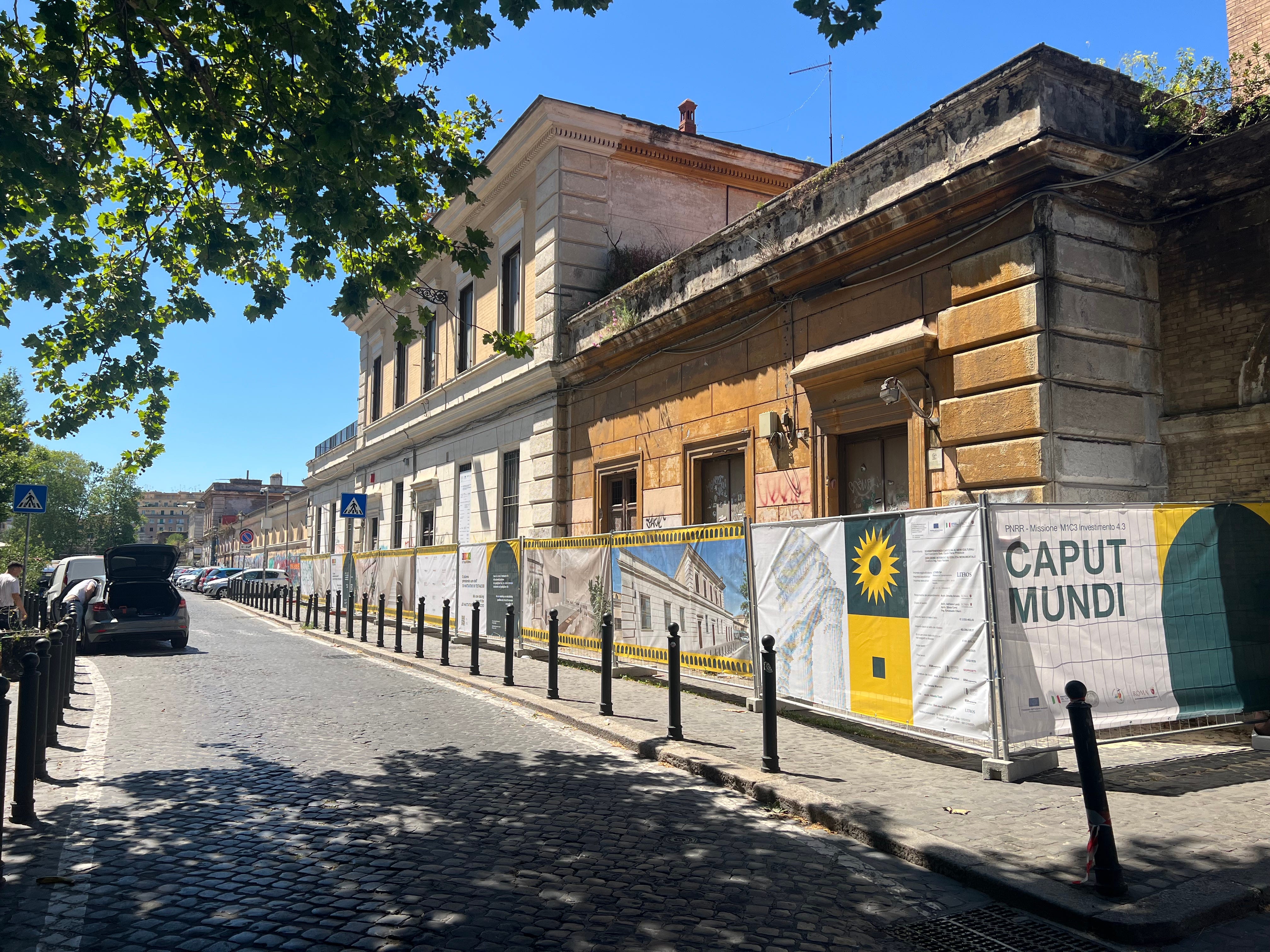
From slaughterhouse to the arts
Il Mattatoio operated from 1891 to 1975. Its facilities spanned 50,000 square metres, expanding to 100,000 square metres including the cattle market (campo boario). At its inauguration, it was one of the largest and most advanced slaughterhouses in Italy, complete with a kosher section. Between 1912 and 1918, refrigerated units were added, making it one of the most advanced in Europe. In 1892 alone, 145,000 bovines and swine met their end there. The slaughterhouse could receive up to 50 train cars of animals at once, and the cattle market could hold 1,200 animals. The complex also housed up to 1,300 bovines, including calves in a designated building—the vitellara—of course without their mothers. That same year, 40,000 pigs were slaughtered there, though the daily capacity was 3,000 over a ten-hour workday.
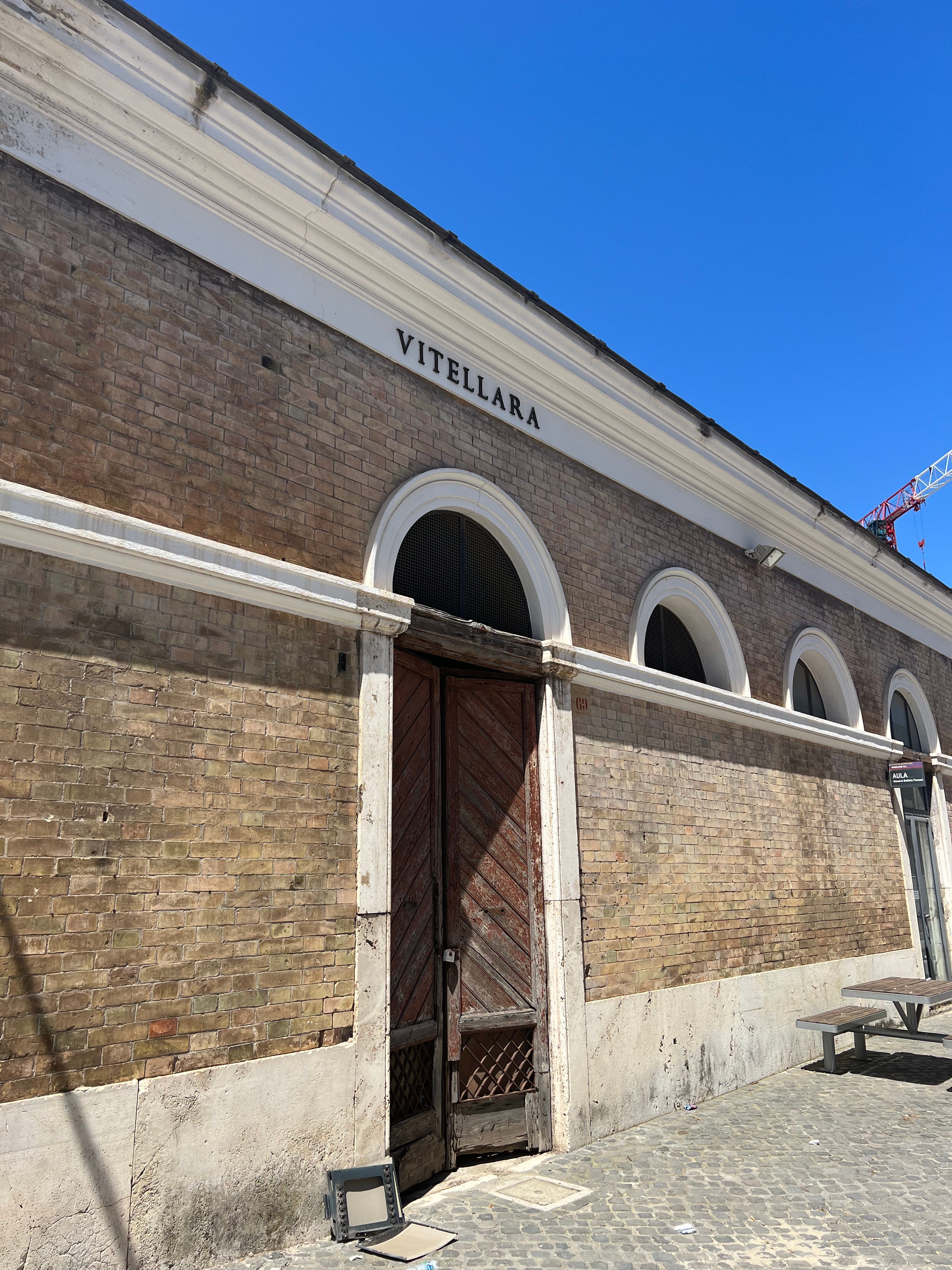
I have been unable to find annual slaughter figures for the entire operation. But conservatively, using only the 1892 numbers, an estimated 12.6 million animals perished here over the slaughterhouse’s 87-year history.
Today, Il Mattatoio, is an arts, culture and university centre.


Of the animals, all that remains are the sites of their exploitation and death: the covered stockyard and buildings still labelled macello (slaughter).


The now-arts gallery retains some of the instruments that witnessed so much terror, suffering, and bloodshed, yet nothing acknowledges this history. The meat trolleys floating above people’s heads are like Carol J. Adams’ absent referent, both for the animals who died there and for the exploited labourers who worked in the industry. As I’ve written elsewhere, animal and human labour exploitation are features of the same brutal system.
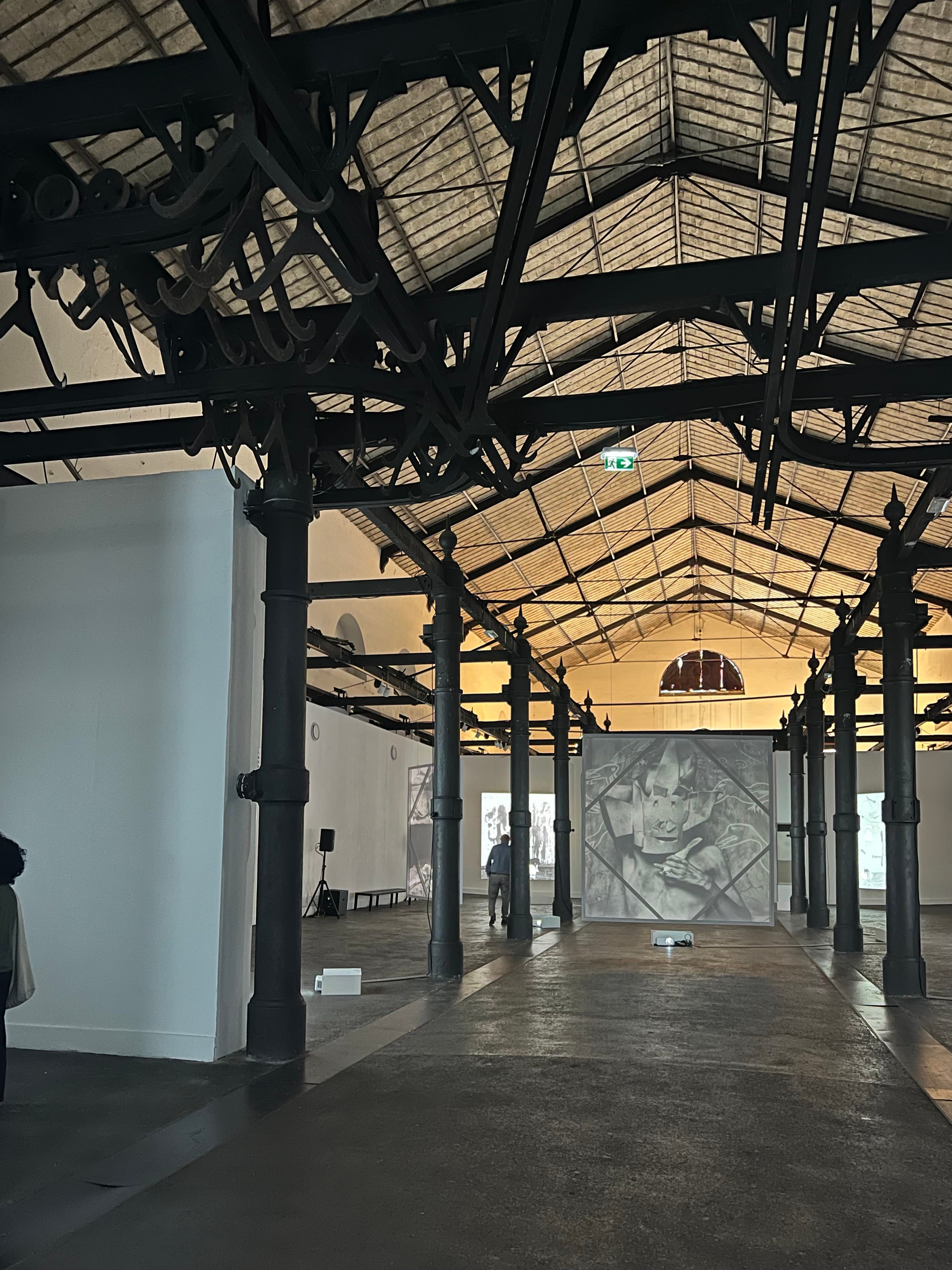
This dissonance, between the rebirth of an industrial deathscape into a place of human culture and arts, doesn’t stop at the gates. From the back entrance to Il Mattatoio, a banner in Ukrainian flag colours declares: “Civilisation and culture – there’s no room for war.” While I agree, we consistently exclude the animals against whom we’ve been waging the longest war (see Stacy Banwell’s work) and about whom we wish to have no memory. How can we truly liberate ourselves from the worst of human proclivities when we cannot even face our own dietary bloodlust?
The dairy cream cheese advert on Il Mattatoio’s billboard, right next to the entrance, was an unexpected moment of irony.
Remembrance
In Medellín, the Museo Casa de la Memoria (Memory House Museum) hosts remarkable stories, documents, art, and multimedia exhibits about the armed conflict that plagued Colombia for about 40 years, making it the longest-running armed conflict in the Western Hemisphere, and one which continues to simmer. The museum is an extraordinary place of understanding, remembering, remembrance, and peace-building. Unwittingly, it is also a place to reflect on our exclusion of animals from any sphere of life unless they are in our service.

One impetus for this museum is to create space for the victims of the conflict, to remember them, and to help visitors imagine a world without armed conflict. The mural at the entrance includes animals and nature, and the museum acknowledges the conflict was also a form of violence against the earth in many ways. So there is a sense of extending remembrance and peace-building outward, though still from a human-centred perspective.
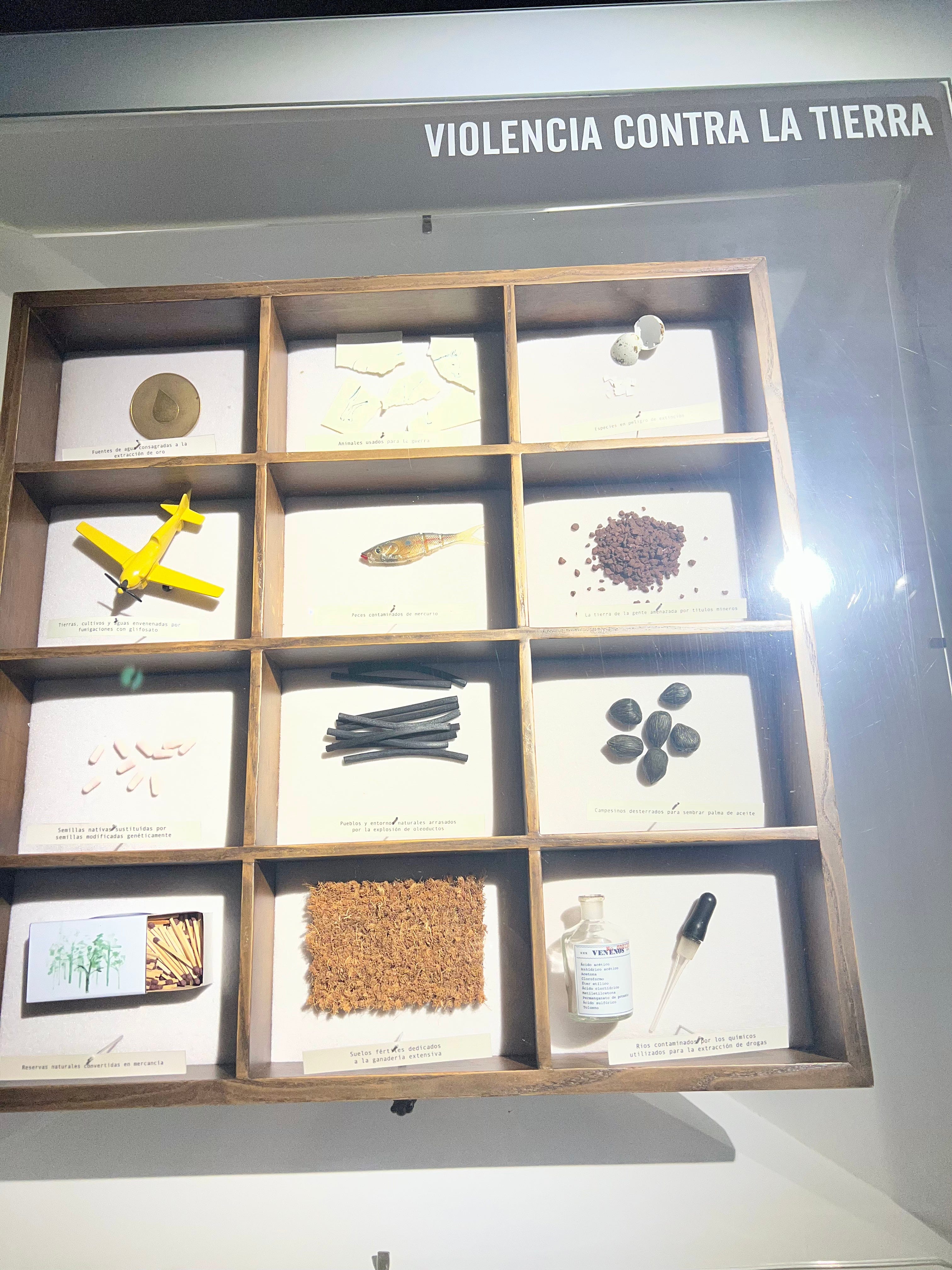
Adjacent to the museum grounds, the Recetario para la Memoria (Memory Cookbook) exhibit is deeply moving.
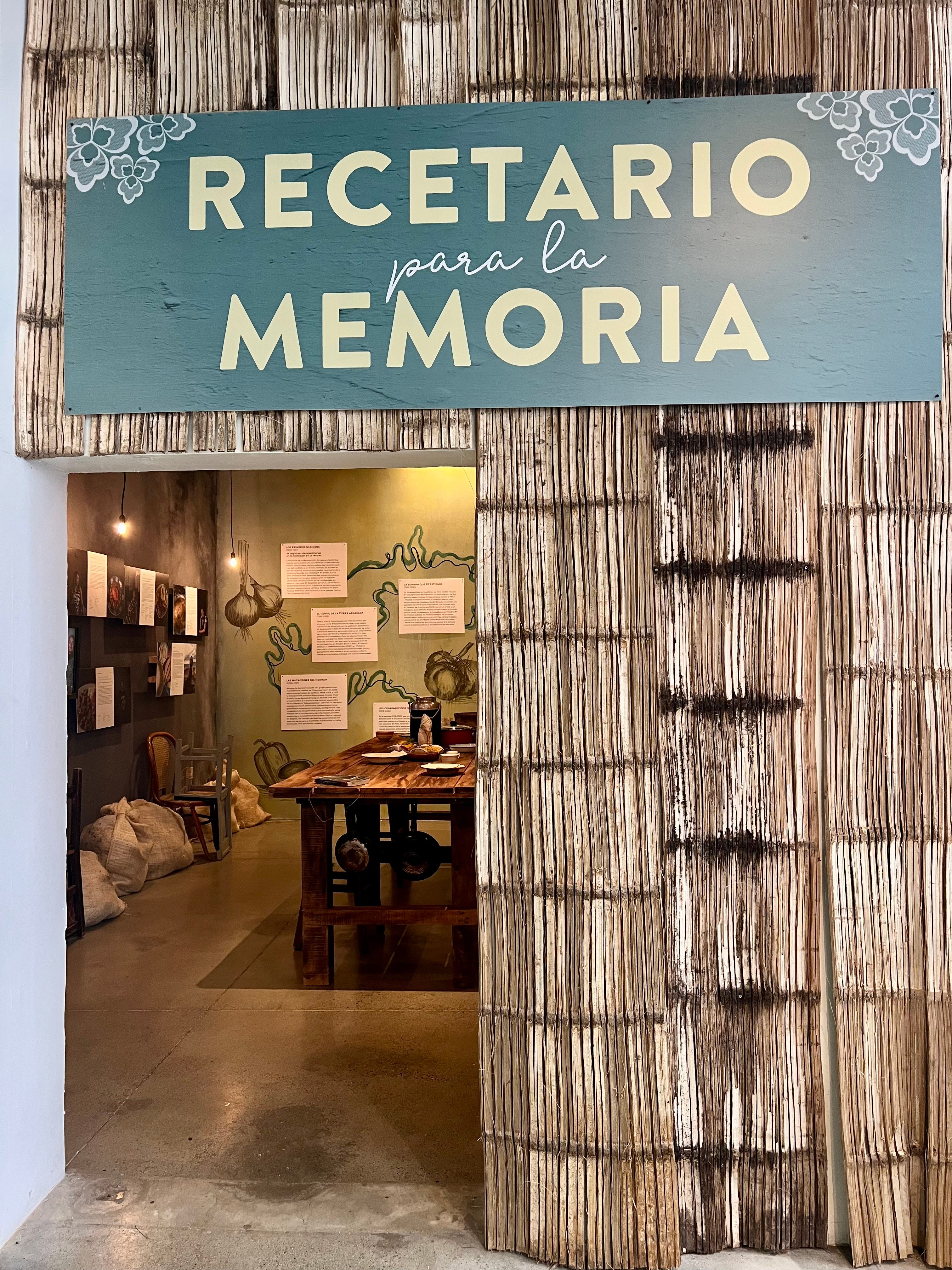
Family and friends of people who were victims of the violence, and some of whose bodies were never recovered, recall a dish their loved one used to prepare or particularly enjoyed, and they provide the recipe. It is intimate, universal, and devastating. Visitors can feel the loss and experience a piece of the disappeared in the familiar setting of a kitchen.
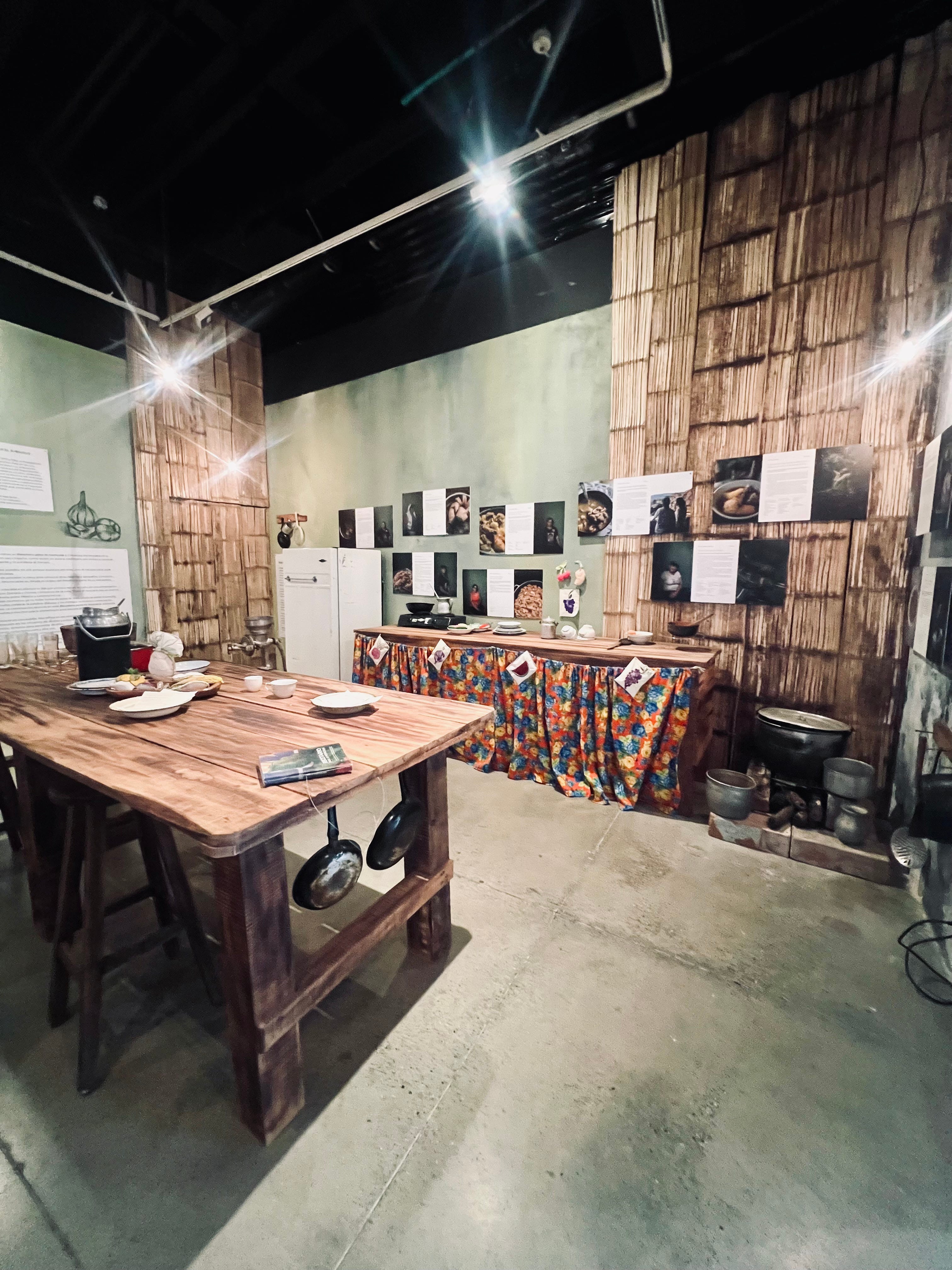
Yet, like anywhere else in the world, each recipe contains its own unrecognised victim: a fish, a chicken, a cow, a pig, an egg, or a dairy product. We do not see these victims as worthwhile except as objects for our daily lives.
They had no choice
In London, there exists a rare thing: a memorial that explicitly names animal suffering. The Animals in War Memorial on Brook Gate, Park Lane, honours the countless animals who served, suffered, and died alongside human soldiers in conflicts from the First World War to the present day. Horses, mules, dogs, pigeons, elephants, and many others, each of them conscripted without any say in the wars of their human owners. The memorial is moving, even haunting, and there is one detail which is particularly devastating. Carved into the stone are the words: “They had no choice.”
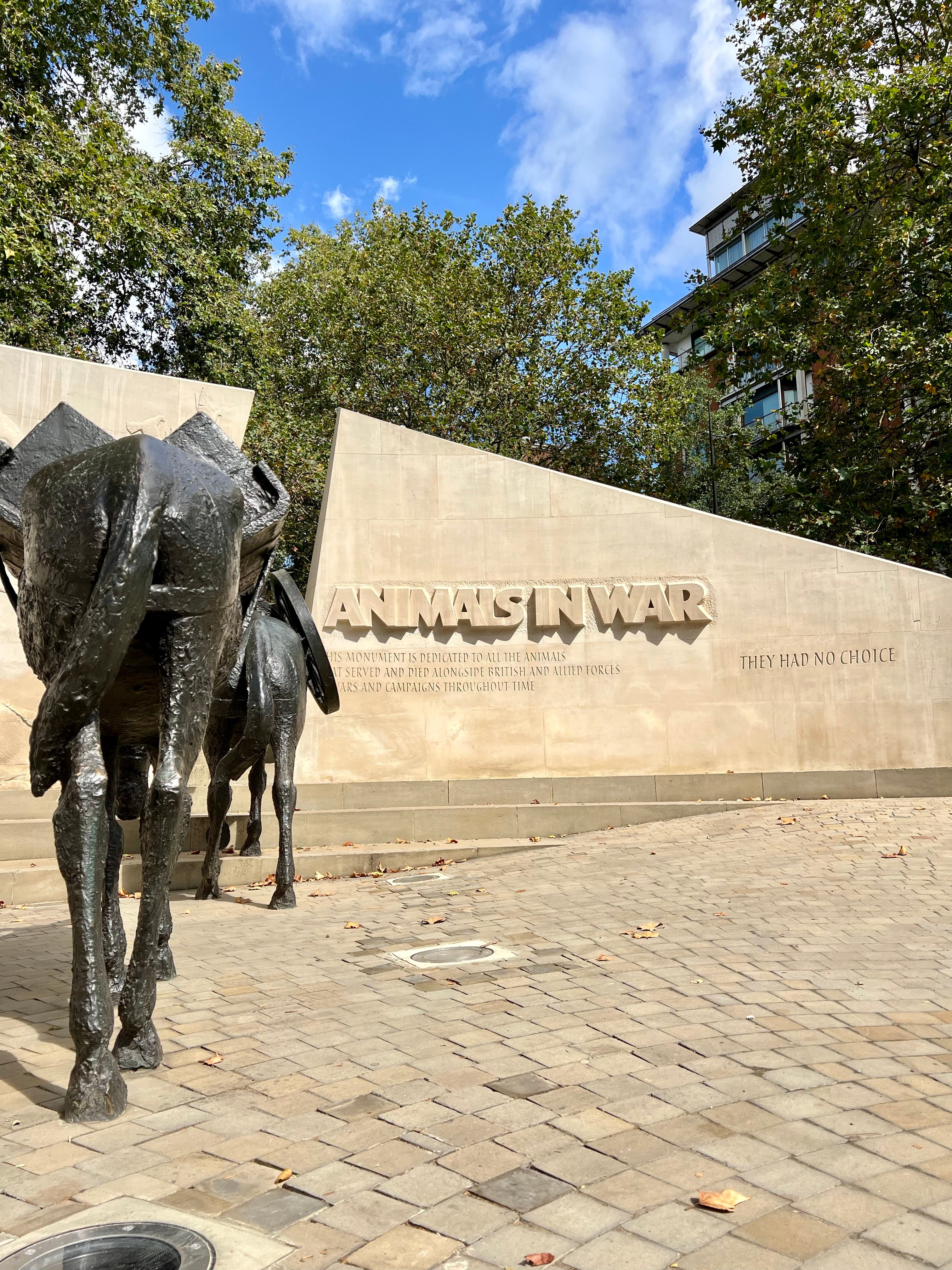
Those four words are meant as an epitaph, a recognition of innocent sacrifice. In their honesty, they expose something far larger than the memorial intends. If we can acknowledge animals drafted into war had no choice, why can’t we the same is true for every animal we use? The pig in the slaughterhouse had no choice. The cow whose milk ends up in that cream cheese advert had no choice. The calf separated from their mother in the vitellara had no choice. The hen whose eggs become a recipe in the Memory Cookbook had no choice. The fish pulled from the ocean had no choice. The rat poisoned in a laboratory, the rabbit whose skin becomes a hat, the sheep sheared until raw, none of them chose any of this. They give no consent. We take everything from them, whether it’s their bodies, milk, eggs, wool, skin, children, their entire lives, before they are even born, and often before they are even conceived. We breed them into existence for the sole purpose of their exploitation and destruction. That is not a relationship. That is not stewardship. That is a sentence.
Terike Haapoja, captures the consequence of this disposability:
Being recognized as fully human means, in most cases, also being recognized as grievable life, while those deemed to be non-, sub-, or less human are seen as life that merely perishes without being a loss.
The war memorial carves into stone that these animals had no choice. By confining recognition to the narrow context of war, we either imply the animals we eat, wear, experiment on, and commodify every day did have a choice, or, and more likely, that their lack of choice and consent somehow do not matter - we don’t even think about it. They perish and we don’t count it as a loss. They die and we don’t grieve.
The Animals in War Memorial speaks a truth about one narrow category of animal use. But every animal used by humans, in every context, has no choice. The only difference between a war horse and a dairy cow is we’ve decided to remember one and forget the other. And in forgetting, we reveal remembrance was never really about the animal at all. It was about us, about what we could extract, and about what we could bear to see.
Others as ourselves
So many of the victims of human conflict, whether in Colombia or anywhere else, were viewed as dispensable, as merely part of the way things are in a conflict. Other than to their friends, family and comrades, their disappearances didn’t register as losses because their lives had already been designated as ungrievable. And we behave similarly towards animals, without appreciating our doing so reinforces the very idea of a “lesser other”: a category of being whose suffering doesn’t count, whose death isn’t a loss, and whose absence leaves no grave. The slaughterhouse becomes an art centre. The cookbook becomes a memorial. The war memorial becomes an exception. And all the while, the animals whose voices we ignore, whose consent we don’t seek and who we breed into existence, haunt the materiality of our world, waiting to be recognised, waiting to be properly grieved, waiting for us to finally realise the same logic used to justify their erasure is the logic used to justify any erasure, and that we are all, always, the ones who decide.
Brilliant and well done as always. Thanks for always taking the time to contextualise what may seem obvious to some, but is nevertheless important in the giant clusterfuck of unlearning and learning that's required of a truly inclusive leftism.
See also:
https://www.atlasobscura.com/places/monument-in-honor-of-the-slaughtered-animals
There's a tendency amongst these things to thank the animals for their sacrifice to feed, transport, entertain, etc, us. It may ease some peoples' cognitive dissonance. But it's yet another act of violence and muddying the humans' & animals' agencies.
---
I'll share more with you another time on the current uses of the sugar refinery building and grounds at waterloo...